The Ref ·
Can You Daily a Supermoto? The Honest Answer, With Numbers
Supermotos are the most fun per corner money can buy. Living with one comes down to four numbers: tank, seat, service interval and pillion tolerance.
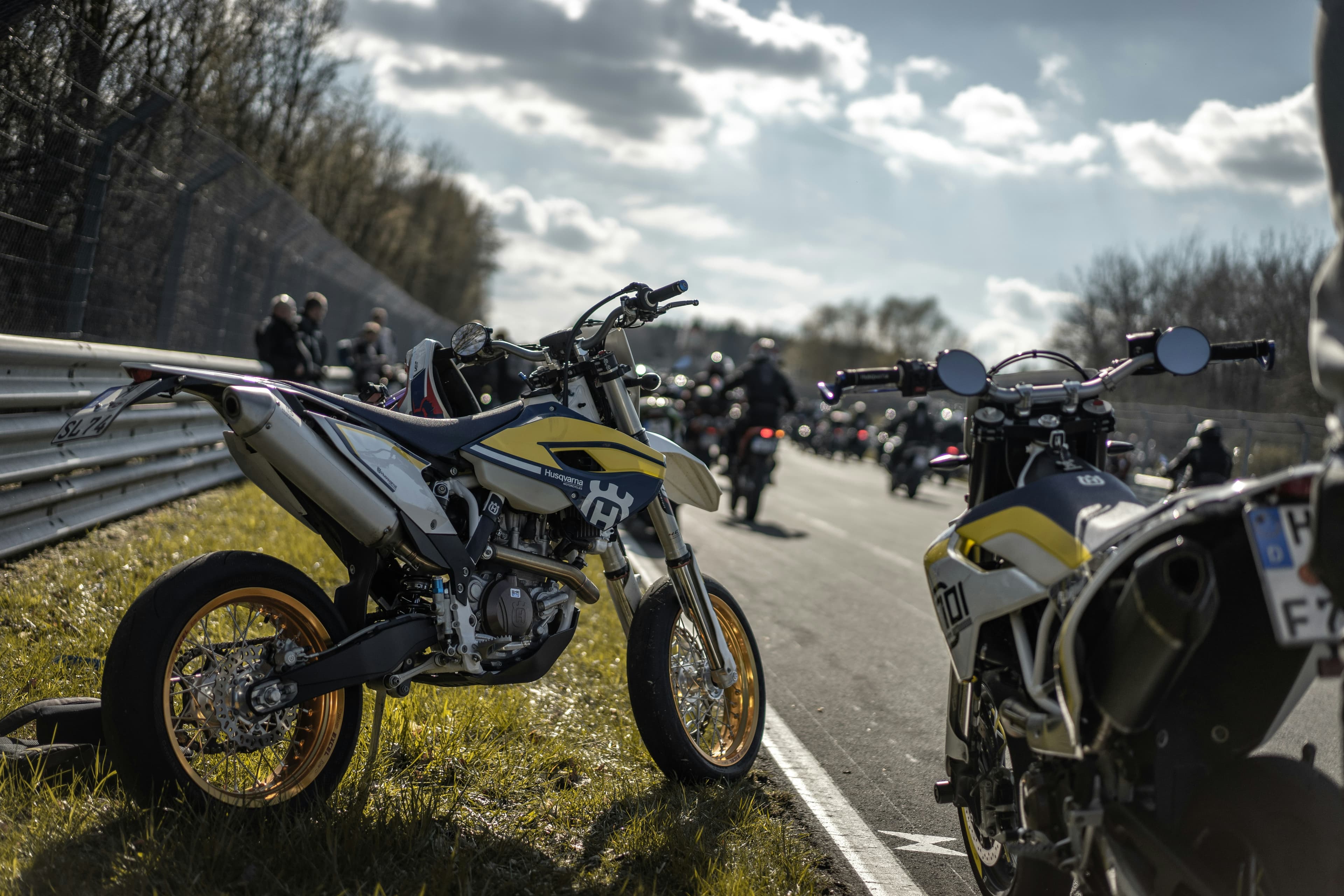
Every few weeks someone asks me whether they can use a supermoto as their only bike, and they are never really asking. They have already watched the videos, they can already picture the commute, and they want permission. I referee for a living, so instead of permission, here are the four numbers that decide it, and a verdict for each kind of rider at the end. You get to argue with arithmetic instead of with me.
The case for, stated fairly
A supermoto is the ideal city weapon on paper: 154 to 161 kg in the A2 class, upright, narrow enough to thread traffic, with more steering lock than any sports bike and suspension that treats potholes as entertainment. A KTM 690 SMC R carries 0.48 hp per kg, which humiliates most things at real-world speeds. Nothing else makes a wet roundabout feel like a career option. This part of the fantasy is completely true.
Number one: the tank
The 390 SMC R holds 9 litres, the DR-Z4SM 8.7. At claimed consumption that is about 250 km of range on paper, and claimed consumption does not survive contact with a supermoto rider's wrist. Plan on fuel stops under 200 km, or every third day of a 30 km commute. The big-bore options fix this partially: 13.5 litres on the 690 SMC R and 13 on the Husqvarna 701 buy you an honest 300 km.
Number two: the seat
Two problems, and height is the smaller one. Yes, 860 mm on the 390 SMC R and 890 on the 690 will filter out shorter riders, and our seat height guide covers that. The bigger problem is shape: a supermoto seat is a plank designed for moving around on, not sitting on, and your relationship with it after 45 unbroken minutes stops being romantic. Commutes under half an hour, no issue. Weekend distance, bring standing breaks.
Number three: the service book
Singles that rev like these ask for attention. The KTM 390 and 690 platforms want a service every 10,000 km with valve checks at 20,000, which is honest for the performance. The DR-Z4SM wants oil every 6,000 km, which at 12,000 commuting kilometres a year means two dealer visits annually for the privilege of owning the tough one. Full schedules and cost estimates are on each bike's maintenance page, like this one for the 690 SMC R, and the bigger picture lives in what a motorcycle really costs per year.
Number four: the pillion, or the lack of one
Every supermoto pillion pad is a legal formality. If another human regularly rides with you, this class is not asking for compromise, it is asking them to file a complaint. Buy a naked bike and keep the supermoto dream for the second garage slot.
The verdicts
- Commute under 30 km, solo, weekend blasts: yes, enthusiastically. This is the exact life a supermoto is built for. Start with the 390 SMC R on an A2 licence or the 690 SMC R past it.
- Commute over 50 km or regular motorway stretches: no. The tank, the seat and the gearing will grind the joy out within a month. Buy a naked bike and rent the fantasy occasionally.
- Regular pillion or luggage: no, and you already knew that.
- Second bike money: the answer is always yes, and the class ranking is on the best supermotos page.
For what it is worth, the scoring engine agrees with the fun part: supermotos post the best handling numbers in our database and the worst practicality ones, and the Ducati Hypermotard 698 versus KTM 690 SMC R comparison is the purest expression of the trade. Buy with eyes open and it is the best bad decision in motorcycling.
The bikes in this post
Specs, scores, service books and rankings for every bike named above, so the numbers in the argument can be checked rather than trusted.
KTM 690 SMC R75 hp / 156 kg / €12,449
KTM 390 SMC R45 hp / 161 kg / €6,999
Suzuki DR-Z4SM38 hp / 154 kg / €9,699
Husqvarna 701 Supermoto74 hp / 157 kg / €12,349