The Ref · · Updated
KTM 390 SMC R vs Suzuki DR-Z4SM: Which A2 Supermoto Should You Buy?
The only two A2 supermotos worth buying in 2026, compared on price, power, running costs and fun. One wins on points, the other on toughness.
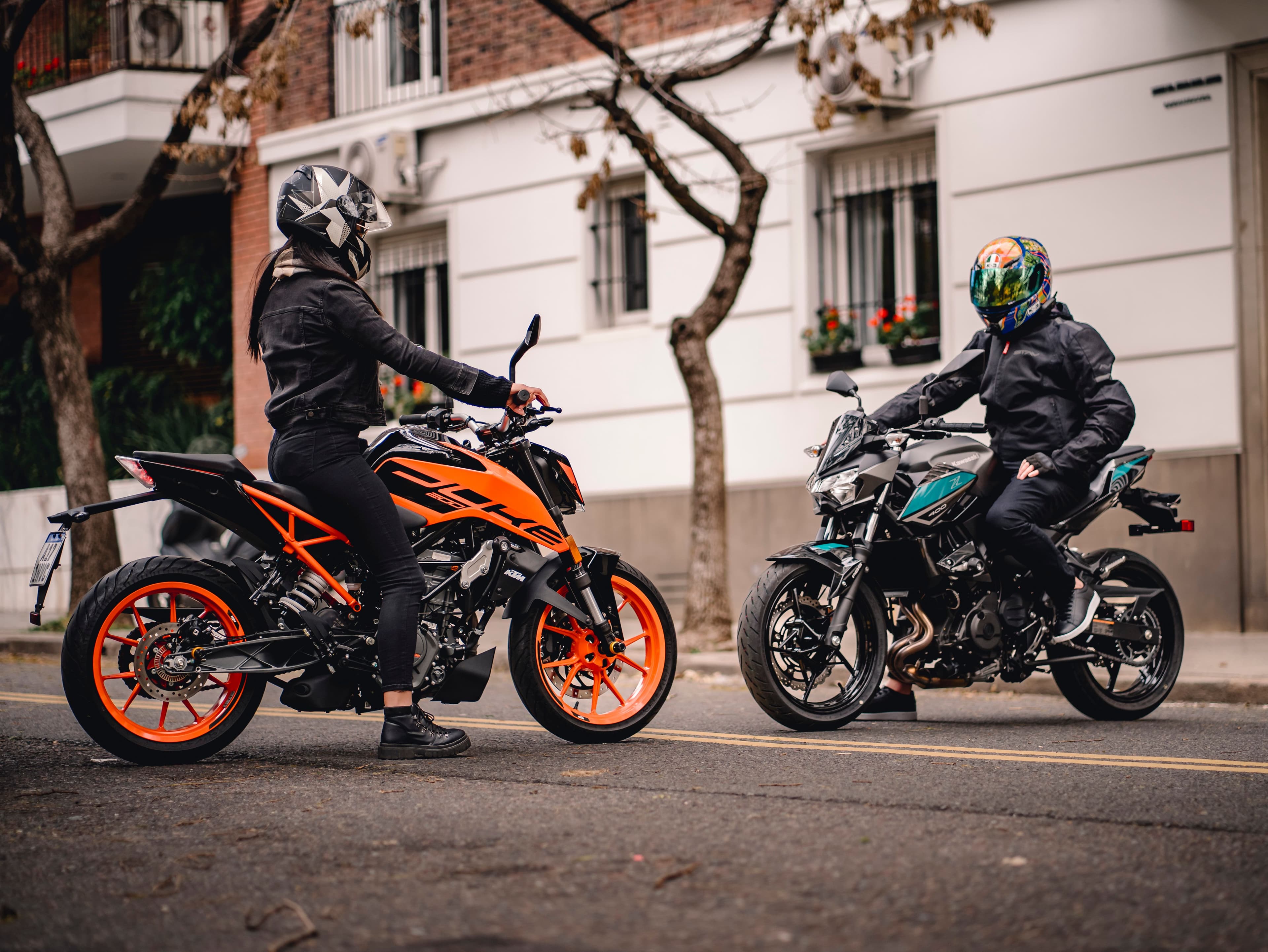
Supermoto is the format everyone loves and almost nobody buys, which is why manufacturers ignored it for a decade. Then two things happened in the same model year: KTM shrank its SMC R formula down to the 399 cc single from the 390 Duke, and Suzuki finally replaced the twenty-year-old DR-Z400SM with an actual new motorcycle. For the first time in years, an A2 licence buys you a choice, and the two options could not be more different.
The short answer
Buy the KTM 390 SMC R unless you have a specific reason not to. It makes 7 hp more, costs 2,700 EUR less, and carries electronics the Suzuki cannot answer. Buy the Suzuki DR-Z4SM if fully adjustable suspension and twenty years of DR-Z durability folklore are worth a premium to you, because those are real advantages and they are the only two it has. The full points breakdown shows exactly where each one scores.
What the numbers say
- Price: 6,999 EUR for the KTM, 9,699 EUR for the Suzuki. That gap buys a season of tyres, fuel and track days.
- Power: 45 hp at 8,500 rpm for the KTM against 38 hp for the Suzuki. Both are A2 compliant out of the crate.
- Weight: 154 kg wet for the Suzuki, 161 kg for the KTM. The Suzuki claws back a little agility here.
- Power to weight: 0.28 hp per kg for the KTM, 0.25 for the Suzuki. The KTM is simply faster everywhere.
- Seat height: 860 mm on the KTM, 890 mm on the Suzuki. Neither bike cares about your inseam, but the Suzuki cares less.
Where the KTM wins
Everywhere the spec sheet can measure. The 390 SMC R brings cornering ABS with a dedicated supermoto mode, lean-sensitive traction control and a TFT dash to a class that used to consider a fuel gauge a luxury. The engine is the sharpest 399 cc single on sale, and it undercuts the Suzuki by the price of a decent used commuter. On our scoring it takes the comparison, and it is not particularly close on performance per euro.
Where the Suzuki wins
The DR-Z4SM ships with fully adjustable KYB suspension at both ends, which is genuinely better hardware than the KTM's WP setup out of the crate, and the softer power delivery makes it the friendlier bike to ride at eight tenths. It also inherits the DR-Z reputation for being impossible to kill. What it does not have is an argument for costing 2,700 EUR more while making 7 hp less. Suzuki is charging for the badge's history, and history does not show up in the corner exit.
Running costs: the part everyone skips
Here is the number that should worry Suzuki buyers more than the price: the DR-Z4SM asks for a service every 6,000 km, the KTM every 10,000 km. If you ride 12,000 km a year, that is two services against one, every year you own it. The Suzuki answers back with a longer 24,000 km valve check interval against the KTM's 20,000 km, but valve checks come around far less often than oil services. The full schedules are on our maintenance pages for the 390 SMC R and the DR-Z4SM.
Living with either one
Both tanks are tiny: 9 litres on the KTM, 8.7 on the Suzuki. Plan fuel stops under 200 km and do not plan touring at all. Pillion accommodation on both is a gesture, not a feature. These are second bikes that occasionally get promoted to only bikes by people who accept the trade, and if that is you, we wrote an honest piece on dailying a supermoto before you commit.
If your budget is not A2 money
The big-bore class got the same shake-up: Ducati's Hypermotard 698 Mono crashed a party the KTM 690 SMC R had to itself for years, and that fight is scored here. The whole class, ranked by points, lives on the best supermotos page.
Whichever way you go, buy the one you will actually ride. A supermoto that sits in the garage loses to a commuter that gets used, every single time.
The bikes in this post
Specs, scores, service books and rankings for every bike named above, so the numbers in the argument can be checked rather than trusted.
KTM 390 SMC R45 hp / 161 kg / €6,999
Suzuki DR-Z4SM38 hp / 154 kg / €9,699
Ducati Hypermotard 698 Mono77.5 hp / 161 kg / €12,990
KTM 690 SMC R75 hp / 156 kg / €12,449