Kawasaki Ninja 500 vs KTM RC 390: specs and verdict
Two supersport bikes scored on the same 100-point system: specs side by side, points per category and a verdict that commits.
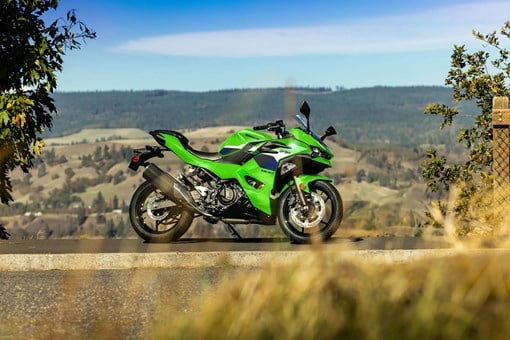
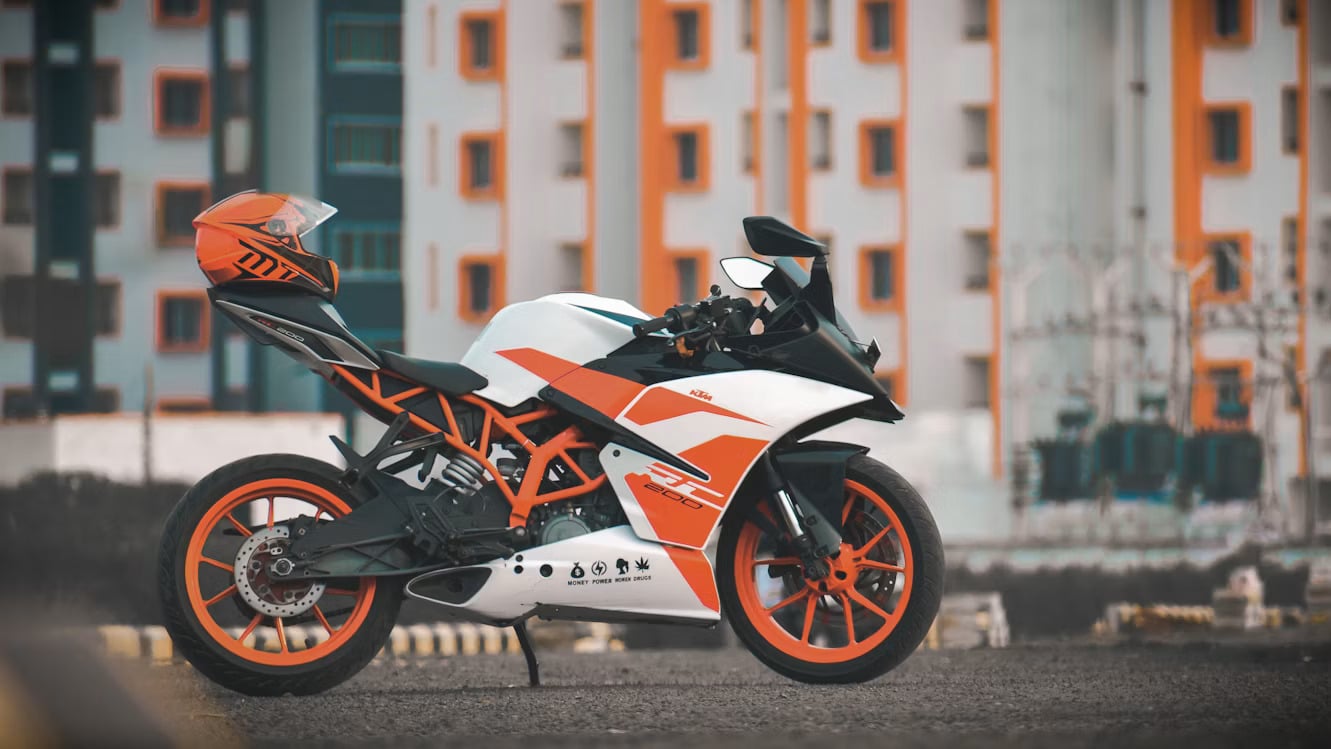
0 to 100 km/h
Estimated from power to weight, not a measured time.
0.00 s
The Ref Ring · 3.4 km · 9 corners
A straight line settles nothing.
The Ninja 500 won on points. Now the Ninja 500 and the RC 390 go flag to flag: braking zones, corner speed and drive off the hairpins, computed from the same specs as the scores.
Race the full lapPoints by category
Six categories, 100 points. How every point is calculated
Engine and performance
out of 25Handling and chassis
out of 20Value
out of 20Practicality
out of 15Technology
out of 10Reliability and ownership
out of 10Specs side by side
| Spec | KawasakiNinja 500 | KTMRC 390 |
|---|---|---|
| Engine | ||
| Engine | Parallel twin, liquid cooled, DOHC | Single cylinder, liquid cooled, DOHC |
| Displacement | 451 cc | 373.2 cc |
| Power | 45.4 hp at 9,000 rpm | 44 hp at 9,000 rpm |
| Torque | 42.6 Nm at 6,000 rpm | 37 Nm at 7,000 rpm |
| Power to weight | 0.27 hp/kg | 0.26 hp/kg |
| Chassis | ||
| Wet weight | 171 kg | 172 kg |
| Front suspension | 41 mm telescopic fork, 120 mm | WP APEX 43 mm open cartridge, 120 mm |
| Front adjustability | Non-adjustable | Compression and rebound |
| Rear suspension | Monoshock, 130 mm | WP APEX monoshock, 150 mm |
| Rear adjustability | Preload only | Preload and rebound |
| Front brake | 310 mm, axial 2-piston | 320 mm, radial 4-piston |
| ABS | Standard ABS | Cornering ABS |
| Dimensions | ||
| Seat height | 785 mm | 835 mm |
| Wheelbase | 1375 mm | 1355 mm |
| Fuel capacity | 14 L | 13.7 L |
| Claimed consumption | 3.9 L/100 km | 3.4 L/100 km |
| Fuel range | 359 km | 403 km |
| Ownership | ||
| Price | €6,595 | €6,899 |
| Service interval | 12,000 km | 10,000 km |
| Valve check | 24,000 km | 20,000 km |
| Warranty | 4 years | 2 years |
| Equipment | ||
| Dash | LCD | TFT |
| Ride modes | No | Yes |
| Traction control | No | Yes |
| Quickshifter | Not available | Optional |
| Cruise control | Not available | Not available |
| Connectivity | No | Yes |
Verdict
The Kawasaki Ninja 500 wins this comparison comfortably, 60 points to 47.
The gap of 13 points is built mostly in value, where the Ninja 500 takes 9.4 points out of the RC 390. Scores are computed within each bike's class from published spec data; the full formula is on the methodology page.
On the road the Ninja 500 is the quicker machine: 45.4 hp and 42.6 Nm moving 171 kg, against 44 hp and 37 Nm moving 172 kg for the RC 390. That is 0.27 hp per kilo playing 0.26.
The Ninja 500 costs €6,595, which leaves €304 in your pocket against the RC 390 at €6,899. Service intervals run 12,000 km on the Ninja 500 and 10,000 km on the RC 390.
Better for city and commuting
Kawasaki Ninja 500
A 785 mm seat, 359 km of tank range and the stronger practicality and value scores make it the easier bike to live with daily.
Better for weekend twisties
Kawasaki Ninja 500
45.4 hp pushing 171 kg with 41 mm telescopic fork up front. It takes the combined engine and handling points.
Better for longer trips
KTM RC 390
403 km between fuel stops and the better equipment score. Distance rewards range and rider aids, and it has more of both.
Frequently asked
- Which is faster, the Kawasaki Ninja 500 or the KTM RC 390?
- The Kawasaki Ninja 500. It carries 0.27 hp per kilo (45.4 hp, 171 kg wet) against 0.26 hp per kilo for the KTM RC 390 (44 hp, 172 kg).
- Is the Kawasaki Ninja 500 cheaper than the KTM RC 390?
- The Kawasaki Ninja 500 is cheaper at €6,595 list, €304 less than the KTM RC 390 at €6,899.
- Which is better for shorter riders?
- The Kawasaki Ninja 500. Its 785 mm seat is 50 mm lower than the KTM RC 390, and at 171 kg it is the easier bike to manage at a stop.
- Which has better technology, the Ninja 500 or the RC 390?
- The KTM RC 390, which scores 8.3 of 10 tech points with cornering ABS, a TFT dash, traction control and phone connectivity. The Kawasaki Ninja 500 counters with a deliberately simple spec.
- Which goes further on a tank?
- The KTM RC 390: 403 km from its 13.7 litre tank at the claimed consumption, against 359 km for the Kawasaki Ninja 500.
- Which bike wins overall?
- The Kawasaki Ninja 500, scoring 60 of 100 against 47 on our within-class points system. The full breakdown and formula are public on the methodology page.